Blog
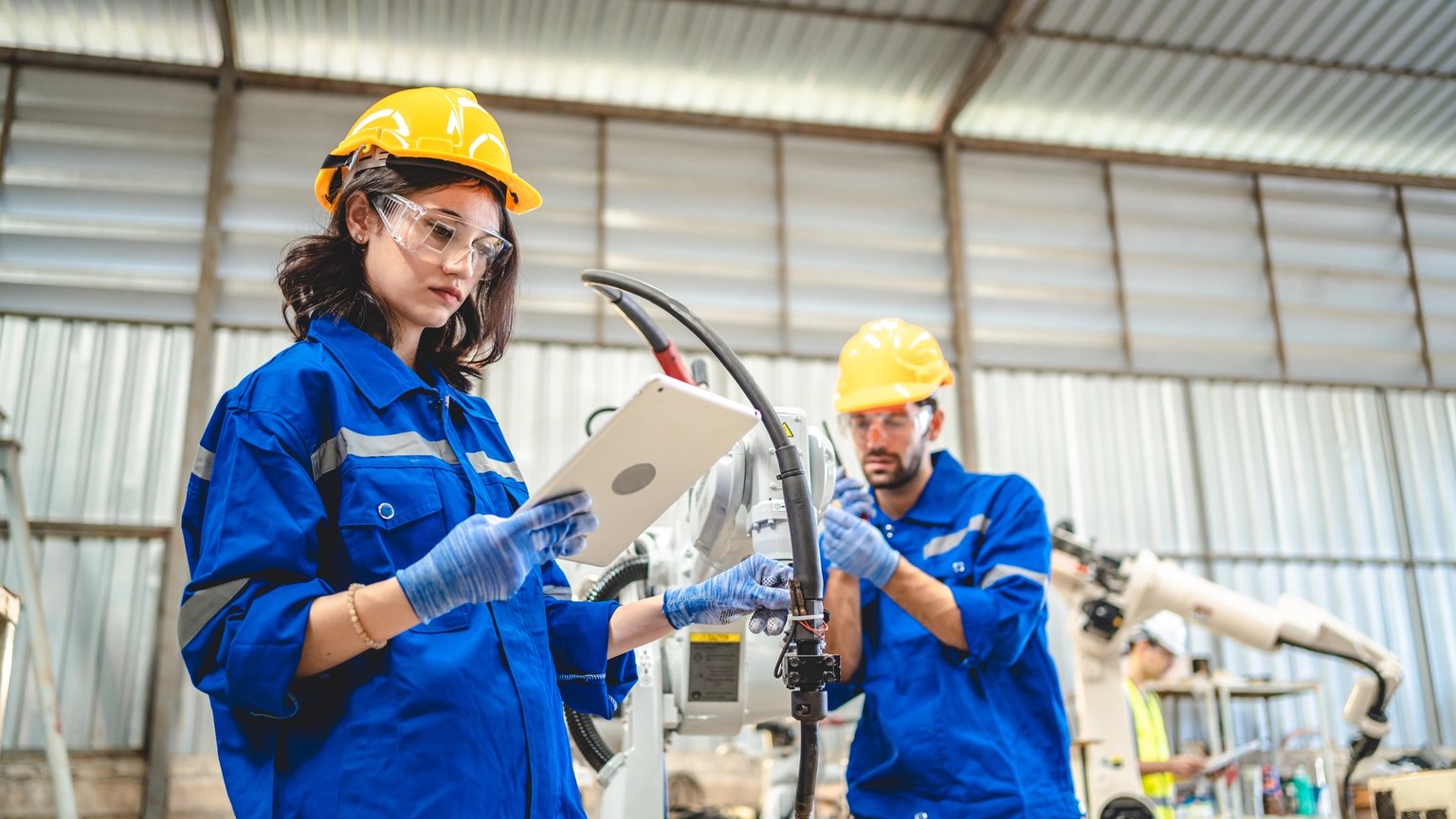
Running a small manufacturing business in an industrial unit means juggling tight margins, unpredictable equipment, and the constant pressure to deliver on time. AI offers a way to tackle these challenges without hiring specialists or overhauling your entire operation.
This guide covers eight practical ways industrial businesses are using AI right now, from predicting machine failures to optimising production schedules, plus how to get started without a massive upfront investment.
What is industrial AI?
Industrial AI uses machine learning and IoT sensors to predict machine failures, optimise supply chains, automate quality control, and improve product design. For small and medium-sized manufacturers, it offers a practical way to reduce unplanned downtime, cut material waste, and get more from your existing team.
So what makes industrial AI different from the AI tools you might use for emails or customer service? It's built specifically for physical operations. Industrial AI analyses data from machines, sensors, and production lines to spot patterns that would take humans much longer to find. Your equipment essentially learns to tell you what it needs before something breaks.
The good news is that industrial AI works with information your business already creates. Every temperature reading, vibration measurement, and production count becomes useful when AI processes it all together.
Eight practical applications of AI in manufacturing
Where does AI actually fit into daily operations? Here are eight ways industrial businesses are using it right now.
1. Predictive maintenance
Most maintenance follows a fixed schedule. You service a machine every three months whether it needs attention or not. Predictive maintenance works differently.
AI analyses sensor data like vibration, temperature, and sound to spot problems before they cause a breakdown. A slight change in how a motor sounds might mean a bearing will fail in two weeks. Catching that early saves the cost of emergency repairs and lost production time.
For a small manufacturer, one unexpected machine failure can throw off an entire week's orders. Predictive maintenance helps avoid that situation.
Computer vision systems can inspect products much faster than any human team. The AI learns what a "good" product looks like, then flags anything that falls outside those standards, including defects too small for the human eye to catch consistently.
What does this mean in practice? Fewer customer returns, less wasted material, and more consistent output. The system works continuously without getting tired or distracted, which matters when you're running long production shifts.
3. Production planning and scheduling
AI can look at your historical data, current orders, and machine availability to create production schedules that balance competing priorities. Rush orders, maintenance windows, staff availability, and equipment capacity all factor into the calculation.
Working through all those variables manually takes hours. AI does it in minutes, and it can adjust the schedule when circumstances change mid-week.
4. Supply chain management
Ordering too much raw material ties up cash. Ordering too little means missed deadlines. AI helps find the right balance by examining sales patterns, seasonal trends, and external factors like weather or economic conditions.
| Unpredictable demand | Analyses historical patterns to forecast more accurately |
|---|---|
| Supplier delays | Identifies risks early and suggests alternatives |
| Excess inventory | Optimises stock levels based on actual usage |
| Cash flow pressure | Reduces capital tied up in materials |
For businesses operating from compact premises, better inventory management also means making smarter use of limited storage space.
5. Energy management
Manufacturing uses significant energy, and costs add up quickly. AI monitors consumption patterns across your facility and identifies where you're wasting power.
The system might suggest running energy-intensive processes during off-peak hours, or it might flag a machine that's drawing more electricity than it used to. Small adjustments across multiple pieces of equipment can add up to meaningful savings over a year.
For more information on how to make your industrial business more sustainable, read our blog on sustainable manufacturing for SMEs.
6. Design and prototyping
Generative AI tools help engineers explore design options faster. You input your constraints, such as weight limits, material requirements, and cost targets, and the AI suggests configurations you might not have considered.
This doesn't replace skilled designers. It gives them more starting points to evaluate and speeds up the early stages of product development when you're still exploring possibilities.
7. Inventory tracking
AI-powered systems track stock levels in real time and can automatically trigger reorders when supplies run low. They also identify slow-moving inventory that's taking up valuable space.
- Real-time visibility: Know exactly what you have and where it is, without manual counts.
- Automatic reordering: Set thresholds and let the system handle routine purchasing.
- Space optimisation: Identify items that aren't moving and free up room for what sells.
For businesses in railway arches or smaller industrial units, efficient inventory management makes a real difference to how much you can produce in your available space.
8. Worker safety monitoring
Computer vision can monitor work areas for safety compliance. The system checks whether protective equipment is being worn and whether anyone enters a hazardous zone when they shouldn't.
This can catch risks before they become incidents. The AI can also track near-misses, giving you data to improve training and procedures over time.
Why AI and manufacturing work well together
Industrial businesses generate enormous amounts of data every day. Machines produce sensor readings. Production lines track output. Quality checks create records. Most of this information sits unused in spreadsheets or databases.
AI thrives on exactly this kind of data. It can process millions of data points and find patterns that would take a person weeks to identify, if they spotted them at all. That slight change in motor vibration that happens two weeks before a failure? AI can learn to recognise it.
The financial case for AI in manufacturing is often clearer than in other industries. Reduced downtime, lower scrap rates, and better energy efficiency all show up directly on your profit and loss statement. You can track improvements month over month and see whether the investment is paying off.
How to start small and scale artificial intelligence for manufacturing
The biggest mistake businesses make with AI is trying to do everything at once. A factory-wide rollout sounds impressive, but it's expensive, complicated, and often fails to deliver results.
A better approach is to start with a pilot project. Pick one specific problem, prove that AI can solve it, then expand from there.
- Choose a clear pain point: Maybe one machine breaks down frequently, or a particular product line has high defect rates. Start with something concrete and measurable.
- Check your data: AI learns from information. Make sure you're already collecting relevant data, or that you can start doing so without major investment.
- Define success upfront: What does "working" look like? A 20% reduction in unplanned downtime? A 15% drop in defect rates? Set the target before you begin.
- Review and expand: Once you've proven value in one area, apply the same approach to the next challenge.
This method keeps costs manageable and builds confidence within your team. Your people learn alongside the technology, which makes scaling up much smoother later on.
For more information on how to scale successfully as your business grows, read our blog on choosing a commercial property that grows with your business.
Ready to reduce downtime and boost output?
AI is becoming accessible to businesses of all sizes, not just large corporations with dedicated technology departments. For small and medium-sized manufacturers, it offers a practical way to compete more effectively by reducing costs, improving quality, and making better use of limited resources.
At The Arch Company, we work with thousands of businesses across London and the UK. Many of our customers operate workshops, light production units, and warehouses from our railway arches and other business spaces. We've seen first-hand how the right space, combined with smart operational choices, helps businesses grow.
If you're looking for flexible industrial space that supports your business, get in touch with our team. We're here to help you find premises that work for you today and as you scale.
Keep reading

How to Rent a Railway Arch
15 Sept 2026
6 min read
Should You Rent a Railway Arch or Commercial Unit?
04 Sept 2026
5 min read

What Is a Commercial Lease and How Does It Work?
06 Jul 2026
5 min read
How to Rent a Railway Arch
15 Sept 2026
6 min read
Should You Rent a Railway Arch or Commercial Unit?
04 Sept 2026
5 min read
What Is a Commercial Lease and How Does It Work?
06 Jul 2026
5 min read