Lease Smart: Why Proximity to Public Transport Matters
27th May, 2026

A great commercial property can still hold your business back if it's in the wrong spot. Location shapes everything from who applies for your jobs to whether customers bother making the trip.
This guide covers what makes a commercial property location work, why transport links matter more than you might expect, and how to evaluate accessibility before you sign a lease.
What makes a good commercial property location
A commercial property location is simply the physical site where your business operates. It could be a shop on a high street, an office above a parade of shops, or a warehouse on an industrial estate. The location you choose affects almost everything about how your business runs day to day.
So, what makes a location work well? Three factors matter most:
- Accessibility: How easy is it for people to get there? This includes staff commuting, customers visiting, and suppliers delivering goods.
- Visibility: Can your business be seen? For retail, hospitality, and leisure businesses, visibility drives footfall. For other businesses, it affects how professional your premises appear to visiting clients.
- Infrastructure: What surrounds you? Transport links, parking, nearby businesses and local amenities all affect how smoothly your business operates.
Public transport connects all three. A property near a busy station or bus route is typically easier to reach, more visible to commuters passing through, and better connected to the wider area. For small and medium-sized businesses in particular, good transport links can make the difference between a location that works and one that creates daily friction.
Think of it this way: your premises are where your business lives — and the neighbourhood matters just as much as the building itself.
Why proximity to public transport boosts your business
Transport links aren’t just important for shops. Being close to public transport benefits almost every type of business, from offices and workshops to storage and light industrial spaces.
When your premises are near a station or well-served bus stop, three things usually follow: you attract stronger talent, see more customers, and simplify logistics.
Staff accessibility and retention
Hiring and keeping good people is one of the biggest challenges for any growing business. If your premises are awkward to reach without a car, you're limiting your talent pool to drivers only. Even drivers may grow tired of traffic jams and parking hassles over time.
A location within a 10-minute walk of a train station or major bus route opens your doors to a much wider range of candidates. Staff can commute more reliably and affordably, which often leads to better retention and fewer late arrivals.
The benefits are clear:
- Wider talent pool: You're not limited to candidates who own cars or live nearby.
- Lower turnover: Staff who enjoy their commute tend to stay longer.
- Fewer disruptions: Reliable transport means fewer late arrivals and last-minute absences.
Customer convenience and foot traffic
For customer-facing businesses, location can make or break you. When someone has a choice between two similar cafés or restaurants, gyms, or service providers, they'll often pick the one that's easiest to reach. If your premises sit a short walk from a busy station, you're already ahead.
This matters even for businesses that don't rely on walk-in trade. Clients visiting your office or workshop will appreciate not having to navigate unfamiliar roads or hunt for parking. A convenient location signals professionalism and respect for their time.
In urban areas like London, where many people travel without cars, proximity to public transport isn't a nice-to-have. It's often expected. A client who has to take two buses and walk 15 minutes may think twice about booking a second appointment.
Consider the difference from your customer's perspective:
- Easy to find: Directions are simple when you can say "five minutes from the station."
- No parking stress: Customers arrive relaxed rather than frustrated.
- Repeat visits: Convenience encourages people to come back.
Delivery and supplier access
Transport links also improve logistics. Properties near major routes tend to offer better road access, making it easier for couriers and suppliers.
For businesses receiving regular deliveries — whether stock, materials or equipment — reliable access reduces delays and keeps operations running smoothly. Locations near transport hubs are often better connected and less prone to disruption.
How to evaluate transport links when choosing commercial property
It’s easy to focus on the unit itself — layout, condition or price — but transport should be a key part of your decision.
Start by checking the walking distance to the nearest station or bus stop. Ideally, this should be within 10 minutes. Anything further may feel inconvenient for staff and customers. It’s best to walk the route yourself to get a true sense of the journey.
Next, check the service frequency. A station that only sees a train every half hour won't feel as accessible as one with services every few minutes. Look at timetables for peak hours, when your staff are arriving and your customers are most likely to visit. Evening and weekend services matter too if your business operates outside standard office hours.
Here's a quick reference for what to look at:
| Factor | What to check | Why it matters |
|---|---|---|
Distance to station or stop | Under 10 minutes' walk is ideal | Longer walks deter staff and customers |
Service frequency | Trains or buses every 10–15 minutes during business hours | Infrequent services feel unreliable |
Route coverage | Do services connect to where your staff and customers live? | Good coverage widens your reach |
Accessibility features | Step-free access, lifts, ramps | Important for staff and customers with mobility needs |
Evening and weekend services | Check timetables outside peak hours | Relevant if you operate beyond 9-to-5 |

Finally, consider where the routes actually go. A nearby station only adds value if it connects to where your staff and customers are based — a well‑located line matters more than proximity alone.
A simple test: make the journey yourself during typical commuting hours. You’ll quickly get a realistic sense of the experience, including crowding, delays and connections.
Flexible commercial leases near transport hubs
Finding a well-connected location is one thing. Committing to a long lease before you're certain it's right is another. For small and medium-sized businesses, flexibility often matters as much as location.
With a flexible lease, you can test a space without locking yourself in for years. If the location works, you can stay and grow. If it doesn't, you can move on without a lengthy exit process or hefty penalties.
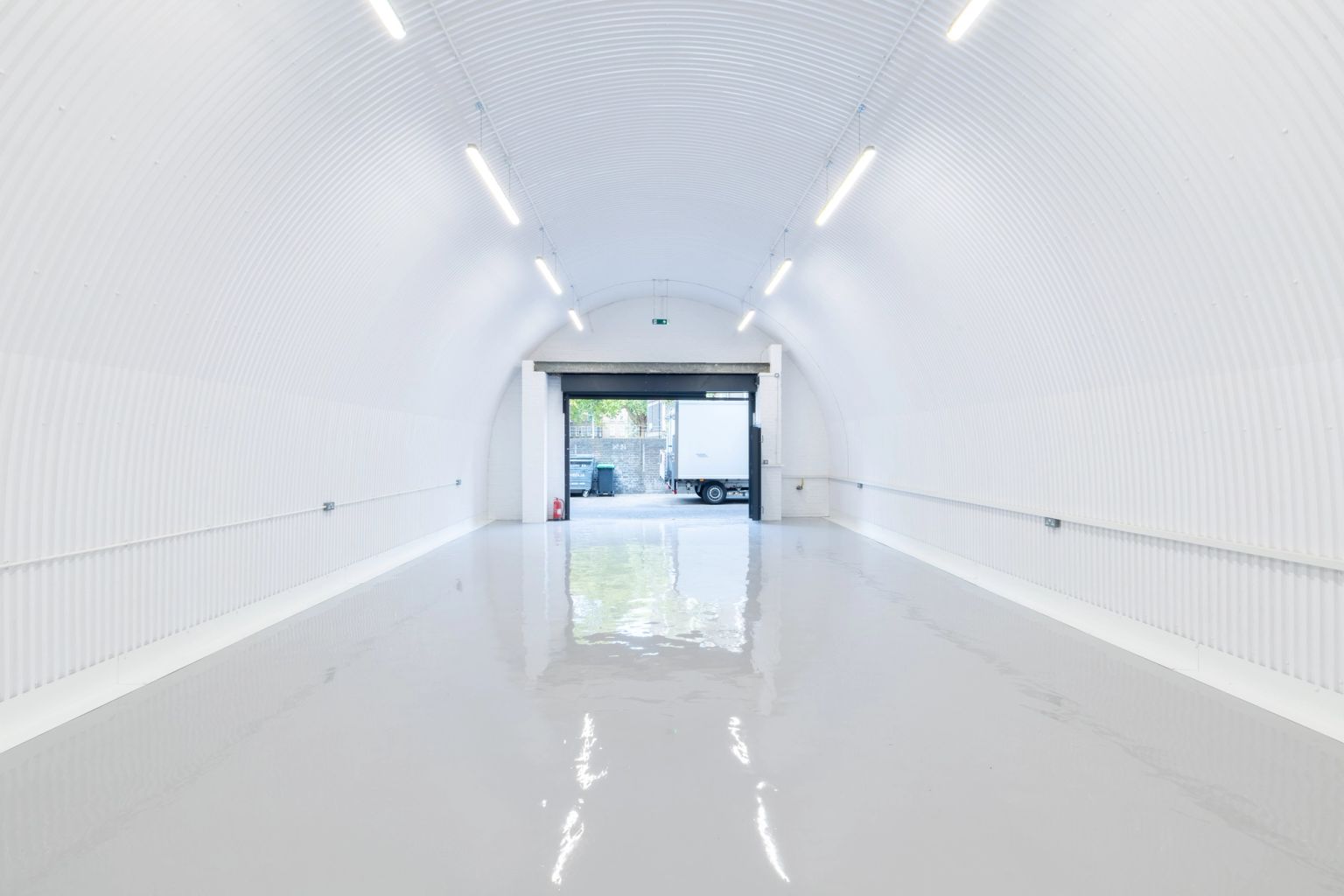
At The Arch Company, we offer flexible lease terms across our portfolio of properties. Many of our spaces sit directly beneath or beside busy transport routes, combining the character and practicality of historic railway architecture with the accessibility that modern businesses expect.
The benefits of flexible leasing terms include:
- Lower risk: With our 90-day satisfaction guarantee, you're not committed for years before you know the space works.
- Room to grow: If your business expands, you can move to a larger space without breaking a long lease.
- Easier exit: If circumstances change, you're not trapped in an unsuitable location.
Whether you're looking for a workshop, retail unit, office, or storage space, our team can help you find something that fits your requirements and your budget. We work with businesses at every stage, from first-time customers to established companies looking for their next location.
Start your search in the right location
Choosing a commercial property location is one of the most important decisions you'll make for your business. Get it right, and you'll benefit from easier recruitment, happier customers, and smoother operations. Get it wrong, and you may find yourself fighting against the friction of a poorly connected site every single day.
Public transport access is a practical, measurable way to assess how well a location will support your business both day to day and in the long term.
If you're ready to explore your options, we're here to help. Get in touch with our team to discuss what you're looking for, or browse our available spaces to see what's on offer in well-connected locations across London and the UK. We look forward to helping you find the right space for your business to thrive.
Check out our related blog: Best Areas to Lease Storage Space in London